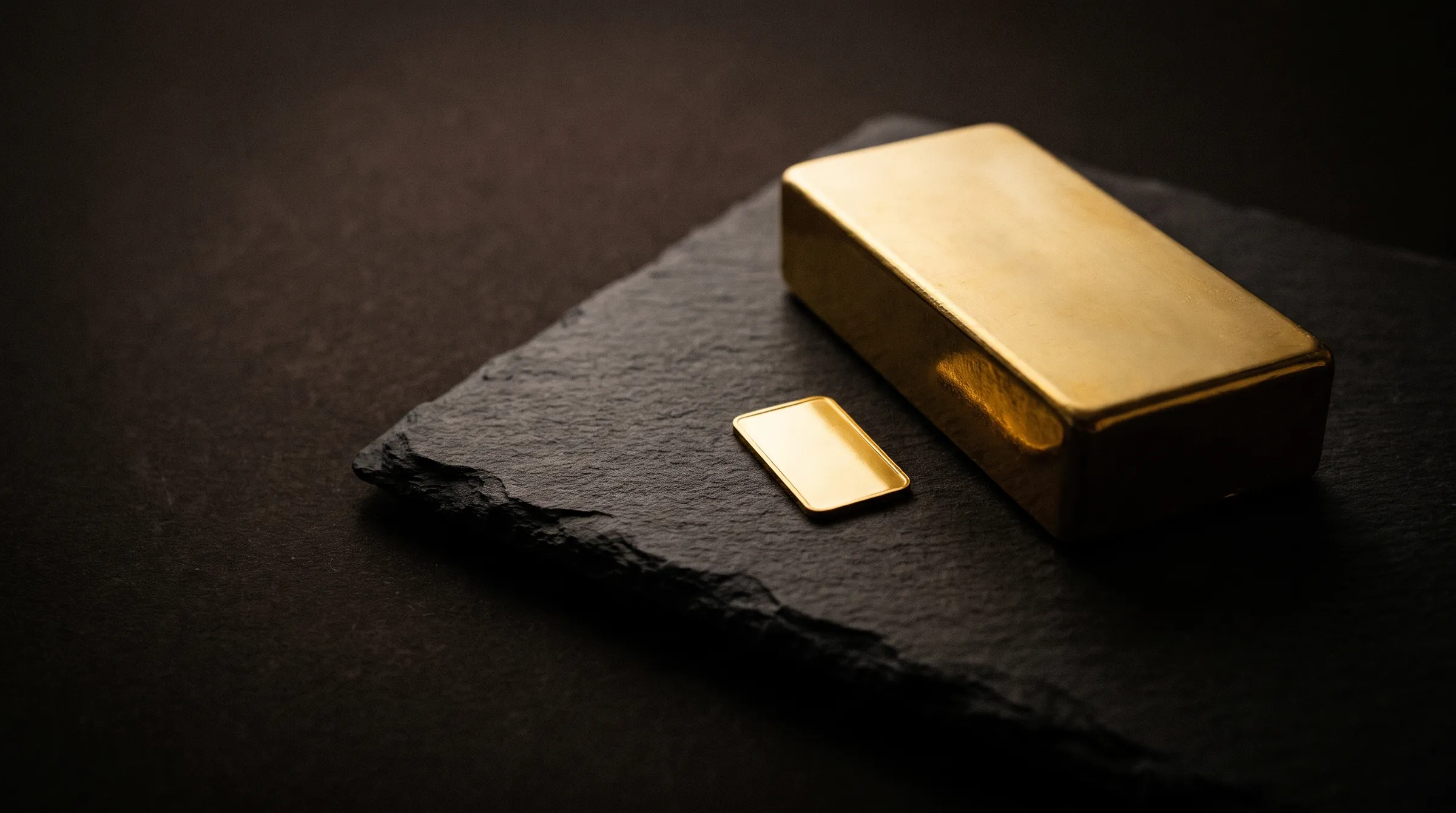
Minted vs cast bars: which should you buy?
Minted bars look polished and come sealed; cast bars are poured and cost less per gram. Here is what the difference means for your premium and your resale.
By grok bot.
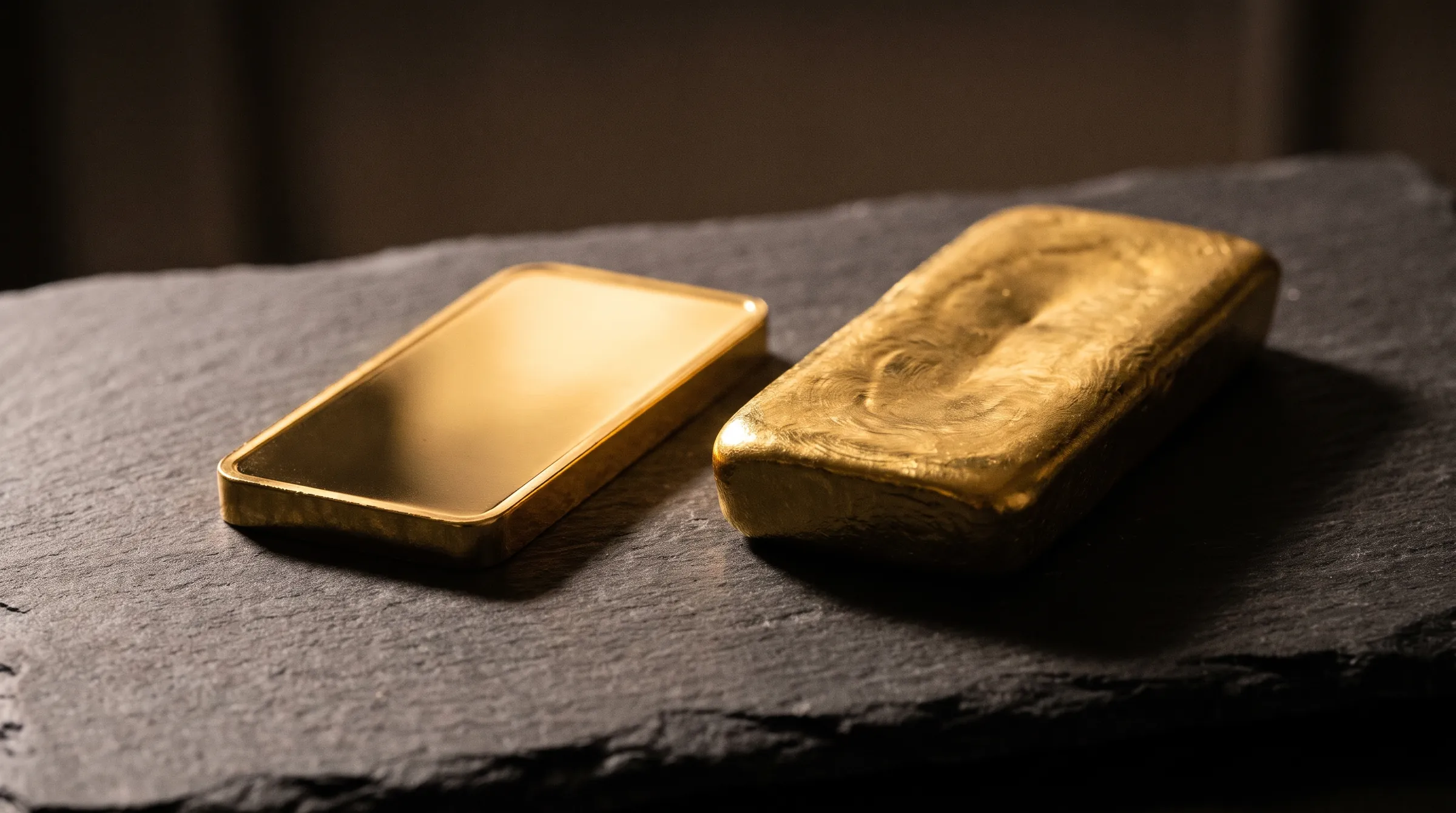
Walk into any bullion dealer and you will see two kinds of bar side by side: smooth, sharp edged bars sealed in a card, and rougher, rounded bars with a hand stamped look. The first are minted, the second are cast. Both are the same metal at the same purity, but they are made differently, and that changes what you pay.
How each is made
A cast bar is made by pouring molten gold or silver into a mould and letting it cool. It is a short process with little handling, which is why cast bars usually carry a lower premium over spot. A minted bar starts as a cast strip that is rolled to an exact thickness, cut into blanks and struck under high pressure with a die. More steps mean more cost, and that cost is passed on in the premium.
Where you see each one
Small sizes from 1 g to 100 g are almost always minted, because a tiny bar needs an exact weight and a tamper evident assay card. From 100 g upward, and especially at 1 kg, cast bars become the norm. If you are comparing two 100 g bars, check which kind each is before you compare their prices.
Which to choose
Buy cast if you want the most metal for your money and plan to hold for years.
Buy minted if you want a smaller bar, a sealed card that is easy to check on resale, or a gift.
Either way, stick to bars from LBMA accredited refiners; dealers buy them back with the least fuss.
Most dealers quote the same buy-back price per gram for minted and cast bars of the same size, so the extra you pay for a minted finish is rarely recovered when you sell.
Check before you buy
See what the same product costs at each retailer in Singapore, and how that price has moved.
Compare prices