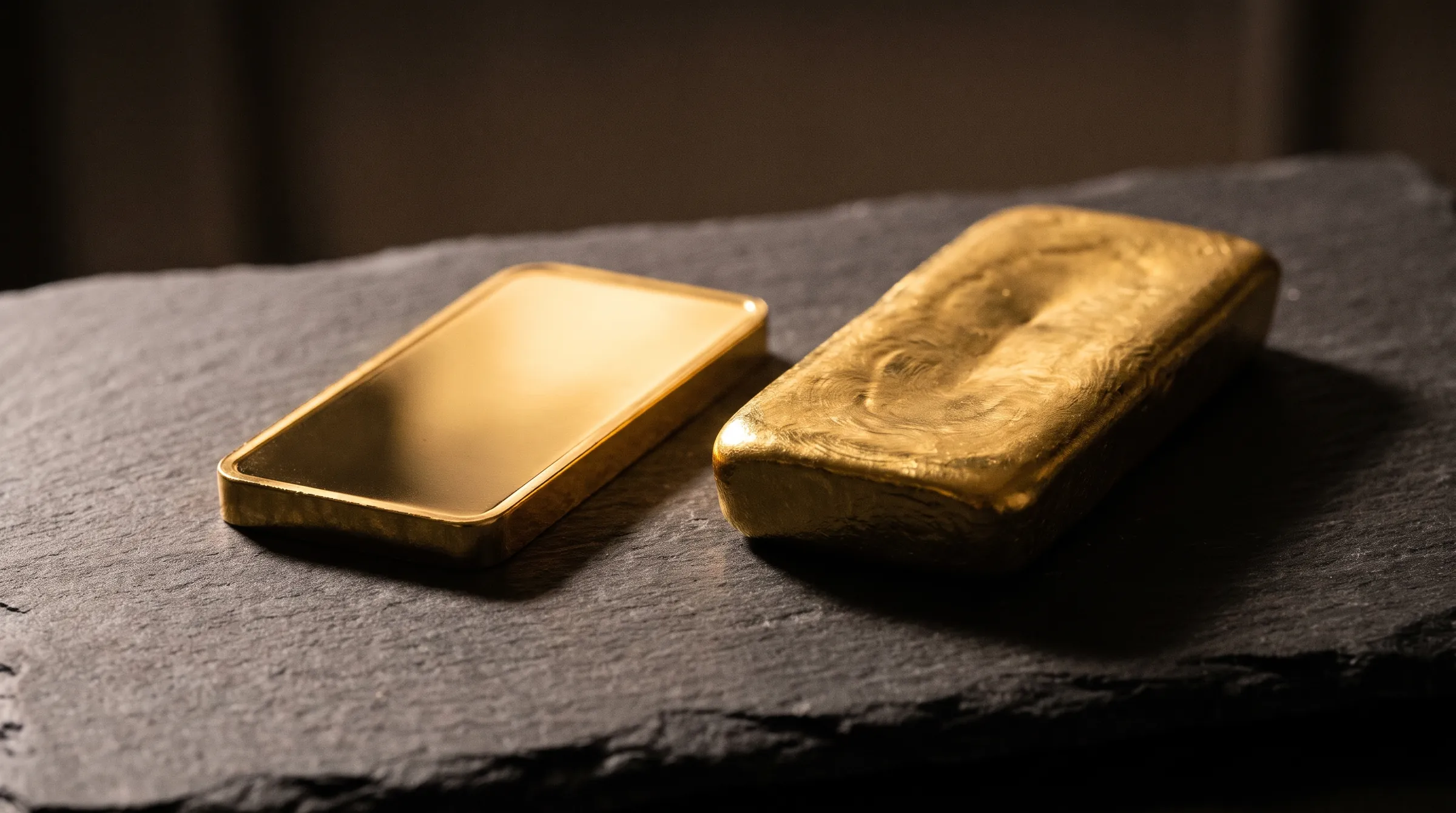
1 oz bar or 1 kg bar: where the premium goes
A 1 kg bar costs less per gram than 32 one ounce bars, but it is harder to sell in part. Here is how the premium scales with size and how to choose.
By grok bot.

Every bar you buy costs spot plus a premium. The premium pays for refining, fabrication, assay packaging, shipping and the dealer's margin. Much of that cost is per bar rather than per gram, so the bigger the bar, the thinner the premium is spread.
How the maths works
A 1 kg bar holds about 32.15 troy ounces. Making one kilo bar takes far less work than striking, packaging and shipping 32 separate one ounce bars. That is why the premium on a 1 oz bar is often several times the premium per ounce on a 1 kg bar. On small sizes like 1 g or 5 g, the premium can be a large share of what you pay.
The case for smaller bars
Size works the other way when you sell. A kilo bar must be sold whole, so you cannot take out a little when you need cash. Some dealers also pay a slightly lower buy-back on large bars or ask for an assay check. Smaller bars let you sell one at a time and are easier to store and move.
A simple way to choose
Work out the total you want to hold.
Compare the effective price per gram across sizes, not the headline price per bar.
Split the total into a few bar sizes so you can sell in steps; many buyers mix 100 g bars with a few 1 oz bars.
Our dealer comparison shows each bar's price per gram beside its spot value, so the premium is visible before you buy.
Check before you buy
See what the same product costs at each retailer in Singapore, and how that price has moved.
Compare prices